
AI is moving quickly from experimentation and personal productivity into the processes at the heart of insurance businesses. But as the technology matures, is technology really the hardest part of transformation?
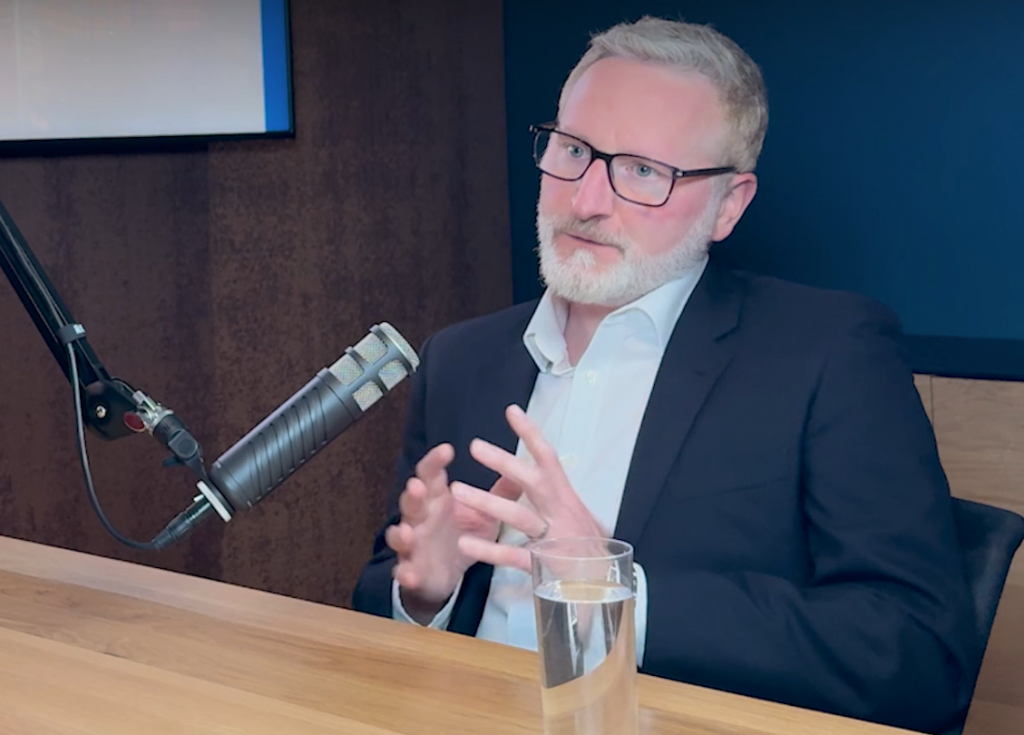
In this episode of Microsoft Insurance Corner, Steve and Heather are joined by James Lees, who lead Microsoft’s Insurance and Investments business in the UK until September 2026.
Drawing on nearly 15 years at Microsoft and his experience working with insurance organisations, James shares his perspective on how the relationship between technology providers and insurers is evolving, and what successful AI adoption really looks like.
The conversation begins by looking at how Microsoft’s relationship with customers has shifted from traditional supplier relationships towards deeper partnerships. James explains how the move to public cloud changed conversations from individual technology products towards platforms, business objectives and transformation, bringing technology discussions increasingly into the boardroom and C-suite.
The discussion then turns to generative and agentic AI. James reflects on the journey from the initial hype around AI, through questions about where the value really lies, to increasing maturity and trust. While personal productivity provided a natural starting point, he is now seeing greater focus on improving business processes, rationalisation, cost reduction and delivering tangible outcomes.
One of the biggest themes in the episode is that AI transformation is not simply a technology programme. James argues that the challenge increasingly sits with people, culture, HR, ways of working and organisational transformation. For technology leaders, this creates new questions around trust, security, workforce impact and how organisations introduce an entirely new way of working.
Steve, Heather, and James also explore the choices organisations face around buying versus building AI solutions, low-code versus pro-code development, and the growing pressure to demonstrate value quickly. James discusses why organisational maturity and existing development practices matter, but also why shorter expectations around time to value can make quick wins particularly important.
James then provides a candid view of Microsoft’s own AI adoption journey. He explains that Microsoft does not have every answer and has sometimes launched internal approaches where the technology worked but adoption did not. Rather than hiding those experiences, he argues there is value in learning from them, changing approach and sharing those lessons with customers.
The conversation looks at practical techniques for creating an AI culture, including internal champions, sharing prompts and best practice, experimentation and gamification. James also describes how AI is beginning to blur traditional boundaries between commercial and technical roles, with commercial colleagues becoming more technically capable and technologists developing stronger commercial language.
Finally, the discussion takes AI outside the workplace. James shares how his daughters are already using Copilot, including for revision, and why that experience reinforces the importance of controls, appropriate information and digital understanding. He also discusses the work of Microsoft’s Families Inclusion Network around online safety and helping families build greater confidence with technology.
In this episode
- How Microsoft-customer relationships are evolving from supplier arrangements towards strategic partnerships.
- Why insurance AI conversations are moving beyond personal productivity and into core business processes.
- Why people, culture and organisational change can be a bigger AI challenge than the underlying technology.
- The trade-offs between buying and building AI solutions, and the growing importance of speed to value.
- What Microsoft has learned when its own approaches to AI adoption have not worked first time.
- How champions, prompt sharing and gamification can encourage experimentation and adoption.
- How AI is changing the boundaries between technical and commercial roles.
- How the next generation is already incorporating generative AI into everyday life, and why appropriate controls still matter.